Thursday, 13 June 2019

08.06.2019 Kuhl's Flying Gecko...

Greetings. 
I know its been a long time since I post my entries. Been busy with work plus not much of trips to birding spots. I was just shooting around my neighbourhood.

I managed to visit Kanching Falls few days ago. Insteaf of getting the birds, I spotted one of my favourite Malaysian reptile...Kuhl's Flying Gecko (Ptychozoon kuhli). 


Ever since I read about it, in late 90s, from a book titled "Malayan Animal Life" (written by a well known naturalists M. W. F Tweedie and J. L. Harrison, published in 1965 by Longman) I wish to spot this gecko in the wild. Unfortunately I did not made it till I visit Kanching Falls. I had seen few specimens at some butterfly farms locally, but it is still not as exciting as to encounter one in the wild.

Kuhl's Flying Gecko in captivity in one of Cameron Highlands butterfly farm


Probably a juvenile Kuhl's Flying Gecko from Kanching Falls, Selangor.
Kuhl's flying geckos are well known member of the global pet trade. Their population status is still not known, but I bet they are rarely seen in the wild. Due to their coloration, they can easily blend themselves with tree trunks, makes them harder to be seen. This is good reason for me to say that I'm lucky enough!

Wednesday, 2 January 2019

02.01.2019 Ethical Birding!

Happy New Year Folks! Wishing you all a great year ahead!

For birders out there...whether amateur or pro birders, they already know this is indeed a great hobby. Some observe the birds, and note done their behavior. Some take photos of birds. Some even collect fallen feathers of birds. This is a hobby that can expand your knowledge on nature itself and the need of its conservation.

A juvenile Purple Heron (Ardea purpurea manilensis)
I started this in 1996, birding around my neighborhood, listed down more than 50 species of birds. I observed those birds for their habits and behaviors and note it down. I also collected fallen feathers. It faded a bit when I was doing my degree, then i slowly picked it up when I start to work. I have 136 species in my personal birding list so far, which includes some entries from Tamil Nadu (India) as well.

A male Oriental Magpie Robin (Copsychus saularis)
You might be also enhanced with some "extra sensory" capabilities; good hearing and rapid "motion capture" abilities...its a part of the package for your years of experience in birding. You may also started to know the names of the plants associated with the birds. Successful photo shoots, entries of lifers in your birding list plus sighting a rare bird or a rarely seen bird gives you a shot of dopamine in you which boost your motivation and enhances mental health.  You may tend to walk or hike during your birding session, which is considered as a healthy activity. I at times walk nearly 5 or 6 km in total during my birding. There could be many other benefits you may get based on your experiences.

Streaked Spiderhunter (Arachnotera magna)
However, I do think we birders need to be ethical towards the birds and its habitat....agree? There are few things that you have to be conscious and aware in birding.

A male Orange Bellied Flowerpecker (Dicaeum trigonostigma)
Watch your distance! This is very, very, very crucial! Do not stress a bird by being too close to it. Keep an appropriate distance. I know its a bit tempting to take a closer look, but you are just about to create a mess. You may scare away the bird; drive it to an area where it can harmed by others or much vulnerable to its natural predators. If you see a nest or nesting ground, you have to be extra careful with your distance. I know its cool to get a couple of photos of nesting birds, but ain't so cool to them if they get stressed due to your presence. Imagine if they see you often near their nest, they may abandon it, leaving those eggs behind. Its like, you had killed 2 or 3 bird right? So be serious when you are at nesting ground. Same goes for the display ground, feeding areas and roosting sites.

This is much more important aspect to be considered if your target birds are from the open lands. They are able to see you from far distance. The moment they noticed of your presence, they might not doing anything (courting, feeding etc) except of watching you. It does give an impact on its survival. So be very careful on this issue. 

So how to fix this? Well, experience will teach you on the distance you should maintain between you and the birds. You may follow some seniors first to the field if you are a budding birder and willing to learn more. Use a blind or the best, natural covers. Think of covert operations! Get good pair of binos or spotting scope. If you are a photographer, get a better zoom for your lens, to avoid the distance trouble here.


Bird Calls Playback! A single bird has few different "ringtones" for different purposes, such as mating (for males and females), calls during feeding, calls for greeting a passer by of the same species, warning and stress calls.  Do not attempt this since there even studies done and the report concluded the damages that call playbacks can do, including, pair break-ups, disrupting social system of a bird colony and also its costs energy when the bird respond to the call.

Crowd! I don't really support birding in big groups. Well 3 to 4 members in a group would be pleasant at least, and make sure they do not blow off the cover. Avoid chit chatting. Use sign language, and plan this before you enter the site. As I said...its like a covert operation. I have seen at some places, for shooting a single bird, tens and twenty bazooka like cameras are pointed at single bird in a very close distance. One such incident was reported by my birding buddy, such crowd stressed the target (migrant) bird, made it venture into another bigger resident bird's territory and finally it was injured by that bigger bird. Good damage right. Don't just flock up and stress them. You may tend to keep on moving closer to the target bird just because the crowd is blocking your view. It ain't good pal!

Flushing! Its like "shoo" the target bird out from the covers to have a good view of the bird and its plumage or purposely make a bird fly to capture its flight photos. Frequent flushing will make them tired and waste their precious energy that they may need to look for food or to breed. If its a migrant, they may need more energy to fly back to their native places. 

"Gardening and Landscaping"! Some do remove a portion of the covers (twigs and branches) around a bird nest just to get a photogenic view. You are just exposing the bird and its nest with eggs or hatchlings to the predators and extreme weather. Its like removing the roof of your house to have a good view of you in the house...and now how do you feel about it? So don't do it!

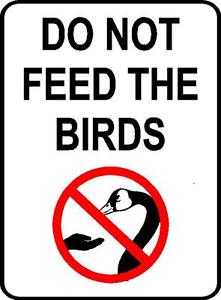
Baiting! I hate this one for sure! Baiting is not a good thing to practice. You may defend yourself saying that, "I give food for it...so what?" Yeah...food....easy food. Frequent baiting on a particular bird, will make the bird to be dependent on the baits instead of hunting its own food in its own natural way. The bird will wait for you to sprinkle the food (bait) all the time. So you are successfully disturbing its natural feeding characteristics. It did happened in one of the birding spot, where the pittas will come to the visitor hoping that food will be provided. Successful domestication! At another spot, to attract kingfishers, frogs are often tied on strings using rubber bands. Just imagine if those kingfishers swallow the frog with rubber bands...who cares...you just need a good photo! Sigh! So don't bribe the birds for photos.


Other important things to consider during birding and bird photography sessions:

1. Keep your volume low....very low. Respect the animals and the nature. Plus you might annoy other birders as well when they are eyeing their lifer.


2. Do not litter. Keep a plastic bag with you to throw the rubbish.


3. Do not use your mobile phones at the site (for non emergency situations). First you may scare away the birds with your ringtones. Second, you will miss a chance to have a glimpse on birds while you are busy with your phone. Imagine if that was a lifer...you wasted it.


4. Before sharing a birding site to other birders or photographers, think again and again about the potential impacts on the birds and the habitat.

5. Do not trespass into private lands just to get a click of your target birds. Seek permission from the right owner if you really need to go in.


6. Do not smoke! This is totally ain't cool.


7. Road Rules! At times we do have to look at this, so that we dont

Be very respectful towards our feathered friends plus their allies in the wild. Don't be just a photographer in the wild, instead try to contribute at least to your minimal level for their survival. They are alive like us. They have a family like us. So be courteous. Happy Birding!

Pacific Swallows (Hirundo tahitica)

Sunday, 14 October 2018

10.10.2018 With a Migrant at Taman Botani Negara Shah Alam

I guess the green pigeons are the first to welcome everyone visiting the botanical park, since they would be busy having their breakfast on the wild fruit trees at the entrance of the park. 
A male Pink Necked Green Pigeon (Treron vernans) looking for Glochidion obscurum fruits.

A male Pink Necked Green Pigeon (Treron vernans)

Paddy plants had grown up. I could only see some JavaN Mynas and a lonely Little Egret at the paddy fields. I walked towards a wild fig tree grown in the middle of the field. I first sighted an Asian Brown Flycatcher, then suddenly I captured a very fast motion of a small bird. Very short burst of flight between point to point, foraging for insects. It was very fast till I hardly could get a good shot of it. Plus, the flycatcher also steals the show, I had to shoot both, one after another. 

An Asian Brown Flyctacher (Muscicapa dauurica) ready to dart on its prey

Asian Brown Flycatcher (Muscicapa dauurica)

I know it must be a lifer. I need to get the field guide to identify it. I shared the photo of the lifer to my birding buddy Shazlan, and he wasn't that sure if its an Arctic Warbler. It was an Arctic Warbler. Small light brown bird with white eyebrow and a single white wing bar on each wings. Arctic Warblers are migrants from Siberia, North China, Eurasia and Alaska. They winter in South East Asia. Arctic Warblers frequently feeds on the canopy. This had made me even difficult to click on this bird. Although the field guide had mentioned that this bird is very vocal, yet it was quiet when I was clicking on it. 

Arctic Warbler (Phylloscopus borealis)....Lifer!

Still hard to get a good click since this bird forage for insects at the canopies.

This is the best I could get of that fast Arctic Warbler

Then I walked towards the swimming pool in search of spiderhunters, but no luck. However, I manage to sight a Greater Racket Tailed Drongo, at just 4m distance. It was busy drying off its feathers, after a stormy night. I had to move early since the sky is getting filled with rain clouds, which gathered up like a large herd of elephants.

Greater Racket Tailed Drongo (Dicrurus paradiseus)

Busy drying off its feathers after a stomry night

Just before it tookoff...

Sunday, 16 September 2018

15.09.2018 Blue Tailed Bee-eaters at Jalan Kebun (Klang)

I went back to my usual birding spot at Jalan Kebun (Klang) in the evening. To my surprise some portion of that area, which was a small abandoned pineapple plantation, was destroyed by bush fire. I then proceed the large dead tree where I usually go, and found a flock of Blue Tailed Bee-eaters.

A small flock of Blue Tailed Bee-eater (Merops philippinus) roosting on a large dead tree.

Blue Tailed Bee-eaters on electric cables waiting hawk flying insects

Blue Tailed Bee-eater in flight

A juvenile Blue Tailed Bee-eater on electric cable

A Javan Myna (Acridotheres javanicus) on utility pole, after a bath.

Black Naped Orioles (Oriolus chinensis maculatus) with White Throated Kingfisher (Halcyon smyrnensis perpulchra)
I also managed to see the September migrant, the Brown Shrike here but unable to get a decent phot of it. 

Saturday, 15 September 2018

09.09.2018 Birding at Bukit Tinggi, Bentong (Pahang)

It was like a family outing to Bukit Tinggi, Bentong but I just prepared myself to get some shots of our feathered friends and others too.

The first bird I saw here was the Black Crested Bulbul...a lifer since I seldom go to hill stations for birding.

A Black Crested Bulbul (Pycnonotus flaviventris caecilii) on a high perch.

Probably a Jamides celeno (Common Cerulean)

Common Flying Dragon (Draco volans)

Common Five Ring Butterfly (Ypthima baldus newboldi)

Plantain Squirrel (Callosciurus notatus)
Striped Throated Bulbul and Pin Striped Tit Babbler are abundant here as well.

Stripe-Throated Bulbul (Pycnonotus finlaysoni) lurking among the Mulberry bush.

Pin Striped Tit Babbler (Macronus gularis) 

Pin Striped Tit Babbler (Macronus gularis)

I managed to click on Pale Blue Flycatcher and Verditer Flycatcher near the parking area of the Botanical Garden. So 2 more lifers. Before leaving the parking area, I managed to see a pair of White Rumped Munias (lifer), the only Munia that can be seen on hill stations.

Pale Blue Flycatcher (Cyornis unicolor) - Male

A juvenile Pale Blue Flycatcher (Cyornis unicolor)

Pale Blue Flycatcher (Cyornis unicolor) - Female

Pale Blue Flycatcher (Cyornis unicolor) - Female

Verditer Flycatcher (Eumyias thalassinus) - Male 

Verditer Flycatcher (Eumyias thalassinus) - Male 

White Rumped Munia (Lonchura striata)

So 4 lifers this time. I guess I have to come early to click on more birds. 

Friday, 14 September 2018

08.09.2018 Again Birding at Taman Botani Negara, Shah Alam.

I went again to Taman Botani Negara, specifically looking to the Spectacled Spiderhunter which I missed in my twp previous visits here. Weather was good, plenty of lighting. I went straight to the paddy field area, but after hearing a familiar call of a woodpecker, I stopped at a tall tree near the entrance. It was a male Common Flameback Woodpecker, busy preening and giving out its signature call.

Common Flameback Woodpecker (Dinopium javanense)

Once done with it, I proceed to the paddy field. Paddy had been planted and there were munias and doves busy feeding on the ungrown paddy seeds. I had a luck to click on Common Kingfisher, a lifer! I met the president of Wild Bird Club, Mr Andy Lee, who told me that the Common Kingfisher is really a passing migrant. It was a new info to me since all the while I was thinking that this little kingfisher is a resident species. There were a juvenile Black Crowned Night Heron and Little Egret too at the paddy field since it was watery.

Pacific Swallow (Hirundo tahitica)

White Headed Munia (Lonchura maja)

White Headed Munias and Zebra Dove feeding on the paddy seeds

Common Kingfisher (Alcedo atthis)

Little Egret (Egretta garzetta)

I then walked to the spiderhunter spot and met another bird photographer who is also waiting for the spiderhunter. I proceed further towards the swimming pool and manage to spot a Little Spiderhunter (lifer), but it was too fast for a good click. Then up above,  an Oriental Honey Buzzard (a lifer too), probably a dark morph female was circling above the swimming pool area. I manage to see a Prevost's Squirrel too, one of the most colourful squirrels in Malaysia.

Little Spiderhunter (Arachnothera longirostra)

Oriental Honey Buzzard - Female, Dark Morph (Pernis ptilorhynchus)

Prevost's Squirrel (Callosciurus prevostii)

I walked back along the same path and again met Mr. Andy who told me to wait bear the fruiting tree and end of the path. There I quuetly waited. There were the calls of the White Bellied Woodpeckers yet I cant see them. Suddenly a (1st winter male) Yellow Rumped Flycatcher (lifer) perched infront of me. Lighting was not that good but managed to click. Like the Common Kingfisher this flycatcher is a migrant as well. It is indeed a quiet bird, since it moves quietly among the foliage. I also managed to have a glimpse of a rare inhabitant of the park, the Black Magpie(lifer).

Yellow Rumped Flycaher - 1st Winter Male (Ficedula zanthopygia)

Black Magpie (Platysmurus leucopterus)
I then walked to the paddy field, and there I found another migrant, a female (or could be a male in non breeding plumage) Grey Wagtail, feeding on the mudflats. Quite a shy species as I cant manage to go as close as I want to get a good shot. Then again bumped on Mr Andy and we walked towards the end of the field where we found a group of Baya Weavers. When just about leaving the area, I bumped on a pair of Stripe-Throated Bulbuls.

Grey Wagtail (Motacilla cinerea)

Pacific Swallow (Hirundo tahitica)

Baya Weaver - female (Ploceus philippinus)

Stripe-Throated Bulbul (Pycnonotus finlaysoni)

Quite a good visit this time as I bagged 6 lifers here.