Happy New Year Folks! Wishing you all a great year ahead!
For birders out there...whether amateur or pro birders, they already know this is indeed a great hobby. Some observe the birds, and note done their behavior. Some take photos of birds. Some even collect fallen feathers of birds. This is a hobby that can expand your knowledge on nature itself and the need of its conservation.
 |
| A juvenile Purple Heron (Ardea purpurea manilensis) |
I started this in 1996, birding around my neighborhood, listed down more than 50 species of birds. I observed those birds for their habits and behaviors and note it down. I also collected fallen feathers. It faded a bit when I was doing my degree, then i slowly picked it up when I start to work. I have 136 species in my personal birding list so far, which includes some entries from Tamil Nadu (India) as well.
 |
| A male Oriental Magpie Robin (Copsychus saularis) |
You might be also enhanced with some "extra sensory" capabilities; good hearing and rapid "motion capture" abilities...its a part of the package for your years of experience in birding. You may also started to know the names of the plants associated with the birds. Successful photo shoots, entries of lifers in your birding list plus sighting a rare bird or a rarely seen bird gives you a shot of dopamine in you which boost your motivation and enhances mental health. You may tend to walk or hike during your birding session, which is considered as a healthy activity. I at times walk nearly 5 or 6 km in total during my birding. There could be many other benefits you may get based on your experiences.
 |
| Streaked Spiderhunter (Arachnotera magna) |
However, I do think we birders need to be ethical towards the birds and its habitat....agree? There are few things that you have to be conscious and aware in birding.
 |
| A male Orange Bellied Flowerpecker (Dicaeum trigonostigma) |
Watch your distance! This is very, very, very crucial! Do not stress a bird by being too close to it. Keep an appropriate distance. I know its a bit tempting to take a closer look, but you are just about to create a mess. You may scare away the bird; drive it to an area where it can harmed by others or much vulnerable to its natural predators. If you see a nest or nesting ground, you have to be extra careful with your distance. I know its cool to get a couple of photos of nesting birds, but ain't so cool to them if they get stressed due to your presence. Imagine if they see you often near their nest, they may abandon it, leaving those eggs behind. Its like, you had killed 2 or 3 bird right? So be serious when you are at nesting ground. Same goes for the display ground, feeding areas and roosting sites.
This is much more important aspect to be considered if your target birds are from the open lands. They are able to see you from far distance. The moment they noticed of your presence, they might not doing anything (courting, feeding etc) except of watching you. It does give an impact on its survival. So be very careful on this issue.
So how to fix this? Well, experience will teach you on the distance you should maintain between you and the birds. You may follow some seniors first to the field if you are a budding birder and willing to learn more. Use a blind or the best, natural covers. Think of covert operations! Get good pair of binos or spotting scope. If you are a photographer, get a better zoom for your lens, to avoid the distance trouble here.
Bird Calls Playback! A single bird has few different "ringtones" for different purposes, such as mating (for males and females), calls during feeding, calls for greeting a passer by of the same species, warning and stress calls. Do not attempt this since there even studies done and the report concluded the damages that call playbacks can do, including, pair break-ups, disrupting social system of a bird colony and also its costs energy when the bird respond to the call.
Crowd! I don't really support birding in big groups. Well 3 to 4 members in a group would be pleasant at least, and make sure they do not blow off the cover. Avoid chit chatting. Use sign language, and plan this before you enter the site. As I said...its like a covert operation. I have seen at some places, for shooting a single bird, tens and twenty bazooka like cameras are pointed at single bird in a very close distance. One such incident was reported by my birding buddy, such crowd stressed the target (migrant) bird, made it venture into another bigger resident bird's territory and finally it was injured by that bigger bird. Good damage right. Don't just flock up and stress them. You may tend to keep on moving closer to the target bird just because the crowd is blocking your view. It ain't good pal!
Flushing! Its like "shoo" the target bird out from the covers to have a good view of the bird and its plumage or purposely make a bird fly to capture its flight photos. Frequent flushing will make them tired and waste their precious energy that they may need to look for food or to breed. If its a migrant, they may need more energy to fly back to their native places.
"Gardening and Landscaping"! Some do remove a portion of the covers (twigs and branches) around a bird nest just to get a photogenic view. You are just exposing the bird and its nest with eggs or hatchlings to the predators and extreme weather. Its like removing the roof of your house to have a good view of you in the house...and now how do you feel about it? So don't do it!
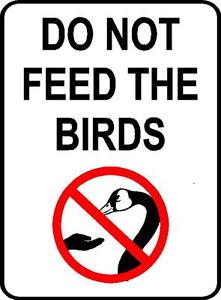
Baiting! I hate this one for sure! Baiting is not a good thing to practice. You may defend yourself saying that, "I give food for it...so what?" Yeah...food....easy food. Frequent baiting on a particular bird, will make the bird to be dependent on the baits instead of hunting its own food in its own natural way. The bird will wait for you to sprinkle the food (bait) all the time. So you are successfully disturbing its natural feeding characteristics. It did happened in one of the birding spot, where the pittas will come to the visitor hoping that food will be provided. Successful domestication! At another spot, to attract kingfishers, frogs are often tied on strings using rubber bands. Just imagine if those kingfishers swallow the frog with rubber bands...who cares...you just need a good photo! Sigh! So don't bribe the birds for photos.
Other important things to consider during birding and bird photography sessions:
1. Keep your volume low....very low. Respect the animals and the nature. Plus you might annoy other birders as well when they are eyeing their lifer.
2. Do not litter. Keep a plastic bag with you to throw the rubbish.
3. Do not use your mobile phones at the site (for non emergency situations). First you may scare away the birds with your ringtones. Second, you will miss a chance to have a glimpse on birds while you are busy with your phone. Imagine if that was a lifer...you wasted it.
4. Before sharing a birding site to other birders or photographers,
think again and again about the potential impacts on the birds and the habitat.
5. Do not trespass into private lands just to get a click of your target birds. Seek permission from the right owner if you really need to go in.
6. Do not smoke! This is totally ain't cool.
7. Road Rules! At times we do have to look at this, so that we dont
Be very respectful towards our feathered friends plus their allies in the wild. Don't be just a photographer in the wild, instead try to contribute at least to your minimal level for their survival. They are alive like us. They have a family like us. So be courteous. Happy Birding!
 |
| Pacific Swallows (Hirundo tahitica) |